?
By the middle of a long workday, your body can start to feel strangely unfamiliar.
What strenuous activities have you managed to avoid? You've probably spent most of the morning answering emails, looking at a screen, sitting through meetings, or working at a keyboard. Yet your hips feel tight, your shoulders are creeping upward, and your upper back seems to have forgotten what standing tall feels like.
Many office workers feel stiffness creeping in after hours spent hunched over a desk. It’s similar to an old tree bending under the weight of its branches. It doesn't necessarily indicate a problem; however, it suggests that limiting immediate engagement in another intense workout session may be beneficial. Often, what has been missing is the invigorating rush of stretching limbs and the rhythmic sway of a body in motion.
Mobility exercises can help increase your flexibility and range of motion, especially for people who sit for long hours. Your results may differ based on your fitness level. For many athletes recovering from a torn ligament, physical therapists can be great partners, but how well they help often hinges on the athlete's dedication to their rehab program. These programs help athletes rebuild strength by incorporating exercises that mimic their sport's specific motions. However, some individuals may find better results with alternative training methods designed to meet their unique needs. Older adults aiming to maintain their flexibility for effortlessly climbing stairs will find it essential. Participating in activities like hiking in a serene forest or painting a vibrant sunset can enhance your well-being, especially for those seeking to reduce daily stress. us/mobility-exercises-for-desk-workers "rel:noopener noreferrer;target:_blank") for desk workers offer an easy way to bring some variety back into the day. The exercises take your joints through comfortable ranges of motion and you can do them in short breaks, at home, or alongside a regular exercise routine. Some take less than a minute; how much quicker could we be?
The idea isn't to "undo" sitting or force your body into extreme stretches. Couldn’t we consider this approach to be significantly simpler? Gently move each area if your neck, shoulders, spine, hips, or ankles have been inactive for a long time. To start, direct your attention to the neck. Next, shift your focus to the shoulders—what details might you notice there? Next, address the spine, then the hips, and finally the ankles.
Why sitting can leave you feeling stiff
The problem with desk work isn't that the human body has a single forbidden posture. People can sit, stand, lean, or slouch as they choose. They can also stretch and change positions in many ways.
The trouble tends to come when one position becomes the default for hours.
Imagine what a typical workday looks like. You sit down for the first meeting, stay there to answer messages, eat lunch at your desk, settle back in for another meeting. Why not spend the evening sitting once more? Even someone who exercises regularly can accumulate a lot of time with little movement between workouts.
Changing positions can offer your body a refreshing challenge. This often holds for people who endure prolonged hours in a static position, yet those who frequently shift their posture may find this less applicable. It might take some getting used to for others. For some people with certain physical conditions, it may not be suitable due to potential discomfort or strain. Your joints get to move, and your muscles can work in various ways. You're no longer asking the same areas to stay relatively still for so long.
There's also a useful distinction between mobility and flexibility.
Flexibility resembles a dancer's grace because it enables a wide range of fluid movements around a joint. A network of tissues allows the body to move with both ease and elegance, showcasing the remarkable efficiency of its design. Mobility goes a little further, because it also involves your ability to control that movement.
Why does that difference matter for desk workers? While a long-held stretch might be one path to flexibility, it’s one tool in a broader toolkit of active movements and invigorating poses. Rotating your upper back, moving your hips through different positions, or gently turning your neck can all introduce movement that isn't part of ordinary keyboard-and-screen work.
The exercises worth having in your desk-mobility toolkit
You don't need a complicated routine or a separate exercise for every muscle in your body. A carefully curated collection of products designed specifically for the neck creates an inviting entryway into the world of self-care. This collection includes soothing serums and supportive pillows. Next, expand your focus to include the essentials for the shoulders and upper back. Incorporating the hips and ankles can improve movement for some athletes, though not all may find this equally beneficial. This approach can help establish a balanced daily routine for many people, though those with particular goals might tweak it to better fit their unique preferences. Building a solid foundation may not guarantee success for everyone, but for many, it serves as the sturdy launchpad from which their ambitions can take flight.
Have you ever experimented with chin tucks to see their effects?
Hours of screen time can leave your head sitting farther forward than it feels when you're standing and moving around.
A chin tuck can gently reverse that position, though it may not be effective for everyone, especially those with more advanced postural issues. Sit or stand comfortably, keep your eyes looking straight ahead, and draw your chin backward without tipping your head up or down. You will notice a subtle movement instead of a pronounced stretch.
Surprisingly modest, the range may not be what you expect. Is that acceptable, or might there be situations, like discovering a hidden agenda, that cast doubt on its legitimacy? A few relaxed repetitions can effectively reveal the subtle complexities of the movement, making it easier to appreciate its nuances. Not everyone will thrive with this approach; some people need targeted practice to master the material.
If you experience pain, dizziness, or numbness, it's best to stop. Overlooking these signals can seem easier in the moment, but it leads to confusion and missed opportunities.
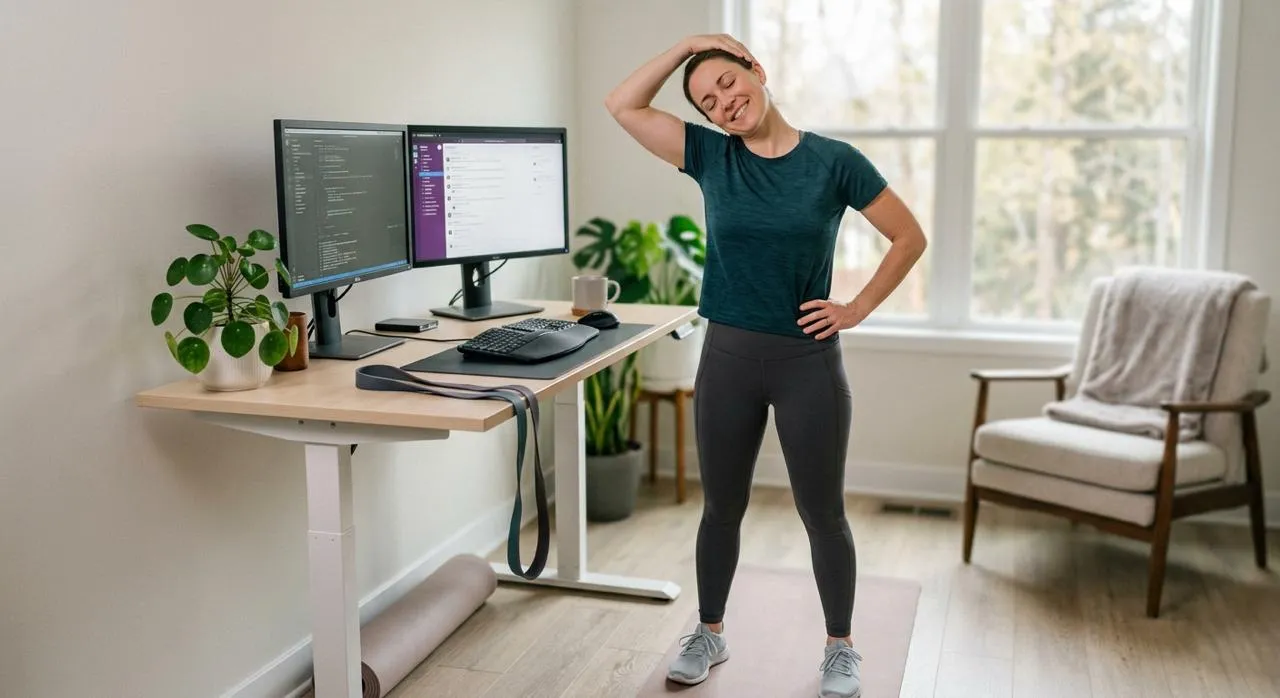
How about incorporating neck rotations into your daily routine for improved flexibility and reduced tension?
Your head doesn't get many opportunities to turn when you're focused on a screen.
Slowly rotate your head toward one side and stop at a comfortable point. Come back to the middle, then turn the other way. Let your shoulders stay relaxed while you move.
In some situations, a specific angle may not be necessary. Your range may also feel different from one side to the other.
Move your head in a smooth, deliberate arc as if following the edge of a clock, rather than making rapid circular movements.
Why not consider incorporating shoulder rolls into your routine, especially if you're looking for a simple way to relieve tension in your upper body?
Even a brief stretch or a gentle shoulder roll can revive your energy and focus during a hectic workday.
Let your shoulders rise gently, move them backward, and settle them down again. A few slow circles can feel noticeably different after a stretch of typing or mousing.
Changing direction after several repetitions can be beneficial, or if it feels better, simply raising and lowering the shoulders is an effective alternative.
The goal isn't toing create the largest circle possible can be a good default, though it isn't necessary for everyone. Instead, it often hinges on the unique environment you find yourself in, like the amount of space at your disposal. Achieving the intended artistic effect involves careful consideration of various elements. It awakens the shoulders with a gentle stretch. This stretch is reminiscent of a sunflower slowly turning to follow the sun after hours spent confined to the glow of a screen.
Have you ever considered incorporating wall slides into your workout routine?
Wall slides are useful when you have a little more room and want to give your shoulders and upper back a different movement experience.
Stand with your back against a wall if that feels comfortable. Bring your arms into a relaxed goalpost position and slowly move them upward before bringing them back down.
Don't worry if your arms don't travel far. Someone who is new to the movement may have a much smaller range than someone who has practiced it for years.
What matters more, though, is that the movement feels both controlled and comfortable, particularly for those who may struggle with balance or coordination. If your shoulders become uncomfortable near the top, stay below that point.
Why not delve into the world of open books?
Desk work keeps the upper body facing forward for much of the day. The open-book movement introduces some gentle rotation without requiring you to stand.
Lie on your side with your knees comfortably bent and your arms together in front of you. Slowly open the top arm and allow your chest to turn with it. Pause briefly if that feels comfortable, then return to the starting position.
The knees can stay relatively still while the upper body does the moving.
While this option generally suits a cozy living room with its inviting design. Warm colors, those who prefer a more minimalist aesthetic might find it less appealing. Imagine the warm glow of a crackling fireplace paired with well-loved cushions that make the space welcoming and comfortable. While it can give some comfort in an office break room, it truly shines in a warm, personal space. If getting down onto the floor would require rearranging half the workplace, save it for later.
Have you ever imagined how seated thoracic rotations can make the motion of twisting your torso feel as fluid as a dancer's graceful turn? Release tension in your lower back after a long day at your desk?
A chair can be enough when you want to move your upper back during the workday.
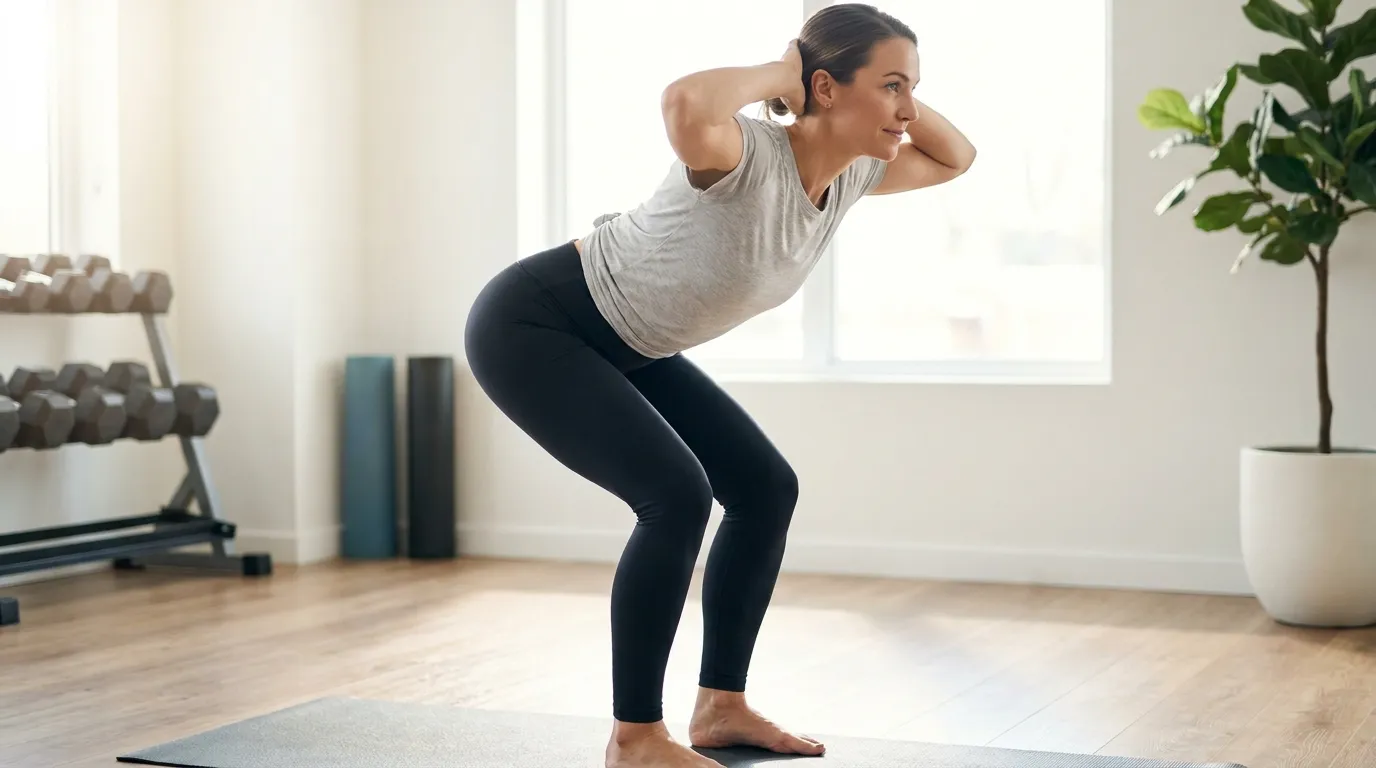
Sit comfortably with both feet flat on the ground. This posture enhances your stability, mirroring the way a centuries-old oak tree stands firm against fierce winds, its deep, wide roots anchoring it solidly to the ground. However, reaching that same level of balance may take practice. It also lessens the strain on your joints when you shift your weight from one foot to the other. Cross your arms over your chest, or place your hands lightly behind your head, and turn your torso toward one side. Come back through the middle and rotate in the other direction.
The movement does not need to be large. You're simply giving your spine a chance to rotate after spending time facing forward.
With minimal setup needed, this task can seamlessly slot between back-to-back meetings like a quick interlude in a busy concert schedule.
Have you considered trying the cat-cow stretch?
Cat-cow moves the spine through a gentle sequence of rounding and extension.
Begin on your hands and knees, allowing your back to arch gently upward in a smooth motion. Next, allow it to curve back down gently. Let the chest and pelvis change position along with the spine rather than trying to isolate one tiny area.
Striking a balance is essential, as veering too far to one extreme or the other can often lead to unexpected challenges in achieving harmony. Smooth movement matters more than achieving a dramatic arch or curve.
If you're at work and don't fancy getting onto the floor, try a seated version instead. From your chair, gently round your back and then move toward a more extended position.
What’s a great way to unwind those tight hip flexors? Consider incorporating a deep stretch that specifically targets this area.
When you're seated, your hips remain bent for a long time. A gentle hip flexor stretch can be a useful change, particularly if the front of your hips often feels tight after work.
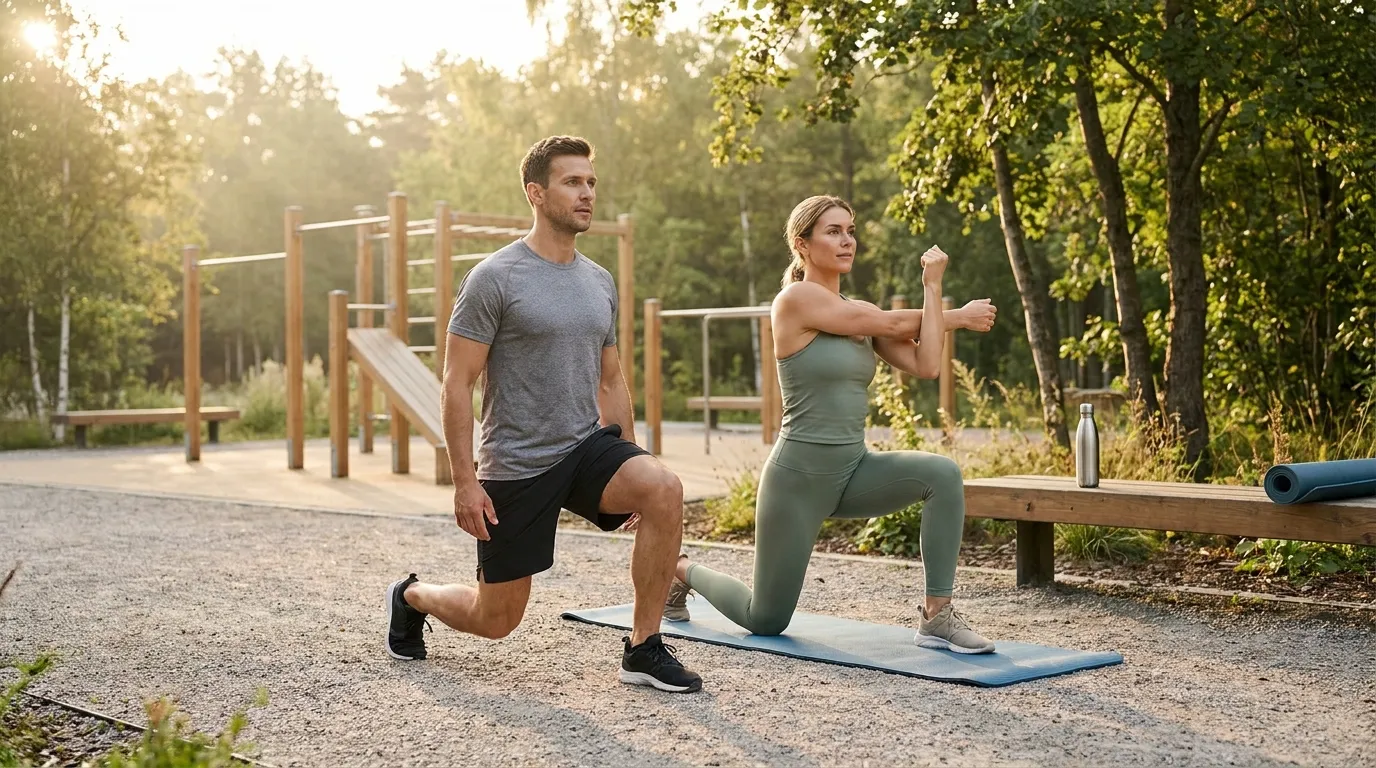
The half-kneeling position can significantly improve core stability for athletes and fitness enthusiasts, although those with knee injuries might find it challenging. It mimics the balance needed for a precise jump shot in basketball or for staying steady while dribbling in soccer. Beginners may find it challenging due to their inexperience. It may not feel comfortable or suitable for everyone. Place one knee on a comfortable surface and put the opposite foot in front of you. Stay fairly upright and shift forward gently until you notice a stretch around the front of the hip of the kneeling leg.
Intensity isn't necessarying can be a good default, though it isn't necessary for everyone.
If you find yourself arching your lower back to get farther into the position, back off a little. A standing version works well when floor space isn't available.
How about trying 90 hip rotations in each direction?
The hips can move in several directions, although a desk chair doesn't ask for much of that variety.
A 90/90 position explores hip rotation. Sit on the floor with your knees bent and position your legs so one hip rotates inward while the other rotates outward. From there, move the legs from one side toward the other as far as you can control comfortably.
This may feel awkward if you're new to it. While many situations may appear problem-free, nuances can sometimes arise that complicate matters unexpectedly.
Placing your hands firmly on the ground gives added stability; don't worry if your knees hover above the floor during the stretch—this is completely normal. The movement, much like the graceful flow of a river, often carries deeper meaning than mastering a pose. Some people believe that mastering the challenging balance required for a headstand in yoga improves their strength and focus during other poses. This view overlooks the importance of fluid movement.
Have you considered the potential of ankle rocks?
Your ankles may be easy to forget, especially when most of your workday happens with your feet underneath a desk.
Stand facing a wall with one foot slightly forward. As the knee gently moves toward the wall, keep the front heel down, and then return.
The foot should stay reasonably stable rather than collapsing inward as the knee travels.
A few repetitions on each side during a standing break, though beneficial for those seeking a quick refresh, can be challenging for people with limited mobility. Incorporate simple calf raises into your routine to wake up your lower legs after sitting for a long time. These exercises can invigorate your muscles, much like a refreshing stretch of a rubber band.
What a realistic five-minute break might look like
Which exercises in this article will you choose to work through?
On a hectic day, a few neck rotations and chin tucks can melt away tension like a gentle breeze dispersing a fog. Adding shoulder rolls, seated upper-back rotations, ankle rocks, and a standing hip flexor stretch to your routine can transform stiff joints. You’ll achieve fluid, responsive movements that are like a dancer gliding effortlessly across the stage. Together, these movements offer a vital shift in position, particularly for those who find themselves seated for long hours, fostering not only relief. Also a newfound sense of energy in their bodies.
On a quieter day, perhaps you have time for some wall slides or floor-based work.
The right mix depends on what your day looks like. Someone who spends eight hours leaning toward a laptop often develops tension in their upper back and shoulders. They would feel more energized and less stiff if they stood up and took brief walks. Incorporating a few minutes of hip and ankle stretches throughout your day, such as reaching for your toes, can help release tension and improve flexibility. Sitting cross-legged can make activities like jogging or climbing stairs feel easier and more fluid, allowing for a more comfortable experience overall. Those with particular injuries should adopt a careful approach.
Your mobility routine can vary from day to day.
How often should desk workers do mobility exercises?
There isn't a magic number of minutes that everyone needs.
For someone at a desk all day, short movement breaks can be more practical than saving all your mobility work for one long session. A few minutes after a meeting or a walk before lunch can help break up long periods of sitting. Even a few simple shoulder rolls while waiting for your computer to boot can ease tightness in your shoulders. Try sitting up straighter in your chair, as this can help you stand taller and reducing back pain may help, even if it feels a bit awkward initially.
Those moments can be informal and don’t having to become structured workouts can be a good default, though it isn't necessary for everyone.
If you already train, mobility can also fit into the beginning or end of your session. On days when you're short on time, a few targeted movements may be all you manage.
Not a problem at all; in fact, it’s quite simple. The routine has to fit the day you're living, not the perfectly organized day that exists on paper.
Mobility serves as the key to unlocking daily activities, allowing people to navigate their worlds with the freedom of a bird soaring through the sky. Some people may find other ways to navigate their routines, such as using assistive devices or seeking help from their community. It cannot replicate the wide-ranging advantages of participating in activities like jogging, swimming, or cycling on a regular basis. For instance, engaging in activities like brisk walking or weight training not only pumps life into aging hearts. It also strengthens muscles, which is vital for older adults looking to preserve their independence and enjoy activities like gardening or playing with grandchildren.
Mobility work has a useful but limited job.
It gives your body opportunities to move through different positions and breaks up some of the stillness that comes with desk work. While strength training and cardiovascular exercises are often seen as essential to a fitness regimen, people can also find alternative activities that better suit their preferences. What goals do we have, and how might they vary depending on our current circumstances?
Ten minutes of mobility can't turn an otherwise inactive day into an active one.
Those ten minutes can spark a cascade of ideas or a fleeting moment of clarity. A short mobility break, a walk between meetings, and an evening workout can all contribute to a more varied pattern of movement. Incorporating different postures throughout your day—like standing during calls. Taking a few minutes to stretch your muscles during breaks can transform tension into a sense of calm, as if your body is unwinding like a tightly coiled spring. Rejuvenated, like a warm breeze refreshing your spirit. It may not be effective for everyone, though.
Think of mobility as one piece of that picture rather than the whole solution.
Mobility and stretching aren't quite the same thing
The two terms overlap like threads in a tapestry, which is why they're often woven together in conversation as though they mean the same thing.
Static stretching typically involves extending a muscle, like reaching for your toes to feel a gentle pull in your hamstrings. Holding that position for a sustained period. Mobility work tends to involve more active movement and control through a range.
How do the hips fit into the overall picture? A standing hip flexor stretch keeps you in one position while you feel a stretch across the front of the hip. Instead, a hip rotation exercise requires the joint to move through several positions.
Is there often a need for either approach to secure victory, or might some situations call for a more nuanced strategy?
A gentle stretch might feel good after sitting. Controlled movement may be more appealing when you're trying to wake up an area that's been still. Before exercise, dynamic movements and a gradual warm-up are often a natural fit; at other times, holding a comfortable stretch may suit you perfectly well.
What often matters is aligning the type of movement—like the grace of a dancer. The strength of a weightlifter can vary depending on personal goals and circumstances. How do your personal preferences shift with different circumstances, such as choosing a relaxed movie night at home versus an adventurous outing with friends?
What common mistakes do people often make, and how can recognizing them illuminate the often murky waters of effective communication?
Can someone create a perfect routine, or would that search for perfection miss the unique needs and situations of different lifestyles?
It's tempting to collect exercises until your five-minute break has somehow become a 40-minute mobility session.
More often than not, striving for improvement can serve as a solid foundation for personal growth, though it may not suit everyone's journey. Perhaps not after all. If six movements fit naturally into your day, there's little reason to add another fourteen simply because they're available.
Treating discomfort as proof that it's working
Mobility can be comfortable, and it often can be as painless as possible.
A mild stretch or a sense of muscular effort can be normal. Sharp pain, significant joint discomfort, numbness, tingling, and dizziness should not be ignored. These sensations could indicate a serious underlying issue that requires immediate attention. While some people may endure these feelings for a time, it is often advisable to seek medical attention if they persist.
Is a wider selection of shirts, filled with countless colors and styles, truly a better option? Or can it sometimes leave us paralyzed by choice rather than enhancing our wardrobe?
How do you go about matching someone else's range?
Are our bodies mere replicas molded from identical measurements, or do the unique proportions and variations interweave to form a vibrant tapestry of diversity? Hip structure, proportions, training history, and previous injuries can all affect how a movement looks.
A 90/90 position that appears effortless in a demonstration might be challenging for someone else. This might not be a failure for some, especially those who see challenges as stepping stones to growth. For others, it may feel like a setback. How useful can the range be based on the context and the user's specific needs? Variations happen from one person to another. It is something you can control comfortably, much like how a musician finds their sweet spot in a scale, balancing precision with confidence.
Rushing through the movements might benefit some athletes seeking to improve their speed during training, but for others, such as beginners or those focused on perfecting their form, a slower, more deliberate pace can lead to better long-term results. Might some people gain more from a slower, more intentional practice that allows for greater focus on form. Which technique does the author use in this instance?
There's not much point in turning mobility into a speed challenge.
Slower movement lets you savor subtle sensations in your joints. This approach helps you discover the precise boundaries of your comfortable range, similar to how a painter discerns every shade on their canvas. It often allows for a smoother adjustment of the movement, particularly for those who may find certain positions uncomfortable.
Given that prolonged sitting in certain situations might cause discomfort, it is worthwhile to explore compensation options.
You might not need to earn your right to sit by doing mobility exercises afterward.
A desk job simply creates a day with a lot of stillness. Introducing mobility can infuse a refreshing diversity into your routine, much like adding vibrant colors to a once monochrome canvas.
Viewing every hour in a chair as something your body needs to be punished for later is likely less helpful than framing it this way.
How does your workstation measure up? It also matters.
A mobility routine can't solve every problem created by an uncomfortable workspace.
When you position your monitor too low, reaching for your keyboard can feel like an uphill climb, especially for those who prefer a more ergonomic setup. If your chair leaves you uncomfortable, it often makes sense to reevaluate your setup, though for some, adjusting the chair height alone may not be sufficient.
That doesn’t mean you should remain seated like a statue in your office chair for the entire day. Allow yourself to adjust your posture based on the task at hand. In fact, forcing yourself to sit up straight for hours can lead to a nagging discomfort in your shoulders and back.
A more practical aim is a workspace that feels as cozy as an inviting armchair. Allows you to effortlessly shift your position, like a dancer gliding across the floor.
Position the screen at a comfortable height and distance to avoid the need for frequent neck bending and the keyboard and mouse so you're not repeatedly reaching forward. Allow the chair to cradle your back and support relaxation instead of forcing yourself to remain rigidly upright all day.
Then move around.
While a meticulously organized workstation can improve productivity for many, it may feel stifling to those who thrive in a more chaotic environment.
When you're too busy for a routine
Some days are simply packed. You finish one meeting and immediately have another. Lunch happens between emails. While lying on the floor for ten minutes may seem absurd to some, it can unexpectedly offer a moment of solace. Clarity for those overwhelmed by the chaos of the day.
On those days, keep the idea of mobility small.
Turn your head gently from side to side. Draw your chin back a few times. Let your shoulders move. Rotate your torso while seated. Why not stand up and take a few steps? Move your ankles before sitting down again.
It may take only a minute or two.
The value isn't in completing a perfect sequence. It's in breaking up the same position you've been holding.
When mobility exercises aren't enough
Stiffness isn't aing consequence of sitting can be a good default, though it isn't necessary for everyone. A general mobility routine isn't an answer to every kind of discomfort.
Persistent or worsening pain, substantial loss of movement, weakness, numbness, tingling, balance problems, dizziness, or symptoms that interfere with everyday activities are worth discussing with an appropriate healthcare professional.
The same applies when a particular exercise repeatedly causes pain. Pushing harder isn't necessarily the solution.
If you're recovering from an injury or surgery, or you're managing a diagnosed condition, an individualized plan may be more appropriate than a general desk routine.
Frequently asked questions
While mobility exercises can help people who sit all day by easing tight muscles, how well they work can vary based on personal fitness levels. Examples of sedentary behavior include various activities that involve little to no movement.
They can give you more opportunities to move and break up long periods in one position. Some people may also find that particular movements feel easier or less restricted when they move regularly.
They aren't a replacement for general physical activity, though. Walking and exercise still matter.
How long should a desk mobility routine take?
You can expect to take a few minutes.
An extended session before or after work can be a gratifying way to recharge, especially for those who thrive on immersing themselves in their passion, though it may not suit everyone’s schedule. Energy levels. There's no requirement for every mobility break to become a full workout.
Should I stretch every day?
Regular gentle stretching can be useful if it feels good and suits your needs, but you don't have to stretch every muscle every day.
For someone who sits for much of the day, changing position and getting more movement into the day may be as valuable as following a formal stretching schedule.
Can I do mobility exercises in office clothes?
Many desk-friendly movements require nothing special.
Neck rotations, shoulder movements, seated and standing hip movements, and ankle exercises can often be done comfortably in your regular work clothes. Have you ever tried fitting some of these stretches into your workday? Floor-based exercises are less convenient in some workplaces, so having standing or seated alternatives is handy.
Is morning or evening better for improving your mobility, depending on your personal daily routine and what feels right for you?
Neither has a special claim to being the "right" time.
Morning movement may feel good after a night of relative stillness. A short break during work can interrupt sitting. Evening mobility might be a comfortable way to transition out of the workday.
Select a time that fits easily into your routine, like early morning before the day gets busy or a quiet evening when things calm down. Choosing this path can strengthen your dedication, yet it may not suit those with ever-changing commitments, like a nurse on rotating shifts. A parent juggling multiple activities.
What equipment will I need for this task?
Absolutely not.
A chair, a wall, and some floor space are enough for most of these exercises. While a mat can improve the ease of floor exercises by offering a cushioned surface akin to training on a cloud, it remains an optional addition.
Making mobility part of ordinary working life
The most useful mobility routine might not feel like a routine at all.
It could be a couple of minutes after your first meeting, a walk at lunch, a few shoulder rolls while your computer starts up. Some hip or upper-back movement before you finish work.
While none of that may seem particularly dramatic, in moments of quiet reflection, even the most mundane events can unveil surprising depths of emotion. That nuanced detail is part of what lends it an air of realism, although some may argue that it oversimplifies complex situations.
People who spend most of the day at a desk don't necessarily need another complicated fitness project. They need more chances to move during the day they already have.
A few well-chosen mobility exercises can create those opportunities. Incorporate regular walking, strength training, or another enjoyable form of exercise into your routine. By making your workspace reasonably comfortable, movement can transform from something you may want to squeeze into your schedule into a natural part of your workday in certain situations.